
"Puerto Rico agriculture"
300 article(s) found

Introduction of fine coffee beans in Dominica coffee flavor manor area with smooth taste
The Dominican flag is rectangular, with a ratio of length to width of 3 ∶ 2. The white wide-striped cross divides the face of the flag into four equal horizontal rectangles, with blue on the upper left and lower right and red on the upper right and lower left. The white cross is painted with the national emblem. Red symbolizes the arduous struggle of fire and blood of the founders of the country for freedom and independence, as well as the blood of the strivers.

What are the characteristics of Latin American coffee, African coffee and Asian coffee? China Coffee Network
1 Latin America [Jamaica] mentions Jamaica, and we immediately hear of "Blue Mountain" coffee. Rare and expensive true blue beans, originally from the Wallensford Coffee Garden, have now been expanded to the Blue Mountains with an altitude of more than 1000 meters. As long as the tree species and treatment procedures of the manor meet certain standards, the government will issue

The taste of Dominica Santo Domingo coffee is mellow with moderately bright sour taste.
In 1586, Captain Drake of England led a fleet to attack the city of Santo Domingo, but was repelled by Spanish troops stationed in Dominica. Between 1605 and 1606, towns on the west coast of Hispaniola were often plundered by pirates, causing most of the local population to move inland. [3] at the beginning of the 17th century, French, Dutch and British pirates lived in the west of Hispaniola

Dominica Santo Domingo Coffee Flavor and Taste introduction to boutique coffee in manor area
Thousands of Tylenos were demoted to slavery and engaged in gold mining. Due to a series of oppression, hunger and disease, by 1535, the Tino had only 60,000 left. In 1501, King Ferdinand I and Isabella of Spain were the first to allow Caribbean colonists to introduce slaves from Africa. They began to arrive on the island in 1503. [3] in the early days of the Spanish island, the Spaniards were in the new.

Introduction to Dominica Santo Domingo Coffee Manor with excellent acidity and pleasant fragrance
In December 1492, Christopher Columbus arrived on Hispaniola on his first voyage. On his second voyage there in 1493, Santo Domingo became the capital of the island. [3] thousands of Tainos were demoted to slavery and engaged in gold mining. Due to a series of oppression, hunger and disease, by 1535, the Tino had only 60,000 left. 1501, Spain

An introduction to the characteristics of the fresh, elegant and full-grained coffee flavor manor in Santo Domingo, Dominica.
At the beginning of the 17th century, when French, Dutch and British pirates were operating in the west of Hispaniola, France began to allow farmers and merchants to gradually colonize the western part of the Spanish island, which was blocked by mountains on the island. It didn't attract the attention of the Spaniards in the east. [3] in 1677, about 4,000 French lived in 11 villages in the west of the island. In 1697, France and

How to brew Rwandan Coffee in the History of Rwandan Coffee cultivation & flavor characteristics of Rwandan Coffee
Professional coffee knowledge exchange more coffee bean information please follow the coffee workshop (Wechat official account cafe_style) Rwanda, a history of rebirth after robbery, using coffee to protect the hopes of many people. Rwanda has unique conditions for growing Arabica coffee, fertile volcanic soil, sufficient rainfall and suitable temperature all year round, all of which make the coffee produced here taste.
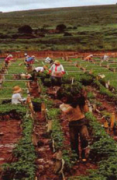
Have a comprehensive understanding of coffee
Legend of Coffee the person who first discovered coffee: a shepherd in Ethiopia, in the fifth and sixth centuries AD. It is said that Niankadi, a shepherd with talent as a poet, herded sheep on the mountain paths of the Ethiopian plateau every day. He liked to drive the sheep home with a shrill flute, but one day the flute sounded again and there was no sign of the sheep. He looked everywhere. Find sheep
The main producing areas of coffee in the world
The main producing areas of coffee in all countries of the world:
Twelve famous high-quality coffee producing areas in the world
one。 In 1808, coffee was first introduced to Colombia, which was brought by a priest from the French Antilles via Venezuela. Today the country is the second largest producer after Brazil. The origin of Colombian coffee: Jamaican Colombian coffee is one of the few original coffee sold in the world under the name of the country. In terms of quality, it

The Coffee producing area of India introduces the Western Gaozhi Mountains
one。 In 1808, coffee was first introduced to Colombia, which was brought by a priest from the French Antilles via Venezuela. Today the country is the second largest producer after Brazil. The origin of Colombian coffee: Jamaican Colombian coffee is one of the few original coffee sold in the world under the name of the country. In terms of quality, it
Coffee common sense 12 famous high-quality coffee producing areas in the world
one。 In 1808, coffee was first introduced to Colombia, which was brought by a priest from the French Antilles via Venezuela. Today the country is the second largest producer after Brazil. The origin of Colombian coffee: Jamaican Colombian coffee is one of the few original coffee sold in the world under the name of the country. In terms of quality, it
Coffee producing area 12 famous high quality coffee producing areas in the world.
one。 In 1808, coffee was first introduced to Colombia, which was brought by a priest from the French Antilles via Venezuela. Today the country is the second largest producer after Brazil. The origin of coffee in Colombia: Jamaica I. Colombia in 1808, coffee was first introduced to Colombia (Colombia), which was started by a priest.
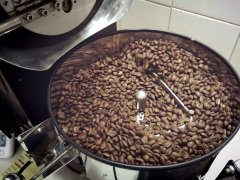
World-famous 12 high-quality coffee producing areas world-wide high-quality coffee beans
one。 In 1808, coffee was first introduced to Colombia, which was brought by a priest from the French Antilles via Venezuela. Today the country is the second largest producer after Brazil. The origin of Colombian coffee: Jamaican Colombian coffee is one of the few original coffee sold in the world under the name of the country. In terms of quality, it
Coffee producing areas Coffee producing areas in the world
1 South America [Colombia] is the world's second largest coffee producer, accounting for about 12% of the world's annual production, although far less than the first Brazil's 30% to 35%, but most of them are high-quality alpine washed beans. Central Colombia is divided into several valleys by three north-south vertical mountains, of which the central and eastern mountains are the main coffee producing areas. Coffee here.

The main producing areas of coffee in the world
1 South America [Colombia (Colombia)] is the second largest coffee producer in the world, accounting for about 12% of the world's annual output, which is much lower than that of Brazil, but most of them are high-quality mountain-washed beans. Central Colombia is divided into valleys by three north-south longitudinal mountains, of which the central and eastern mountains are the main coffee producing areas. Coffee here

Coffee in the world's major coffee producing areas common knowledge
1 South America [Colombia] is the world's second largest coffee producer, accounting for about 12% of the world's annual production, although far less than the first Brazil's 30% to 35%, but most of them are high-quality alpine washed beans. Central Colombia is divided into several valleys by three north-south vertical mountains, of which the central and eastern mountains are the main coffee producing areas. Coffee here.
Analysis of producing countries of High-quality Coffee beans in Coffee Bean producing countries
1 South America [Colombia (Colombia)] is the second largest coffee producer in the world, accounting for about 12% of the world's annual output, which is much lower than that of Brazil, but most of them are high-quality mountain-washed beans. Central Colombia is divided into valleys by three north-south longitudinal mountains, of which the central and eastern mountains are the main coffee producing areas. Coffee here

What if you can't quit coffee and are sensitive to caffeine?
Although the raw materials are similar: eggs, beans (coffee beans are beans) and flour, those who drink coffee and sandwiches, and those who drink soy milk and eat egg pancakes are probably not likely to be the same. Drinking coffee sometimes becomes a ritual in the office, with a latte in the morning to warm your stomach, a cup of black coffee to clear the intestines after dinner, and a coffee break; meeting if you are tired from work in the afternoon.

The basic knowledge of coffee in the main producing areas of coffee all over the world
1 South America [Colombia (Colombia)] is the second largest coffee producer in the world, accounting for about 12% of the world's annual output, which is much lower than that of Brazil, but most of them are high-quality mountain-washed beans. Central Colombia is divided into valleys by three north-south longitudinal mountains, of which the central and eastern mountains are the main coffee producing areas. Coffee here